
Why Preventive Maintenance Matters
Vibratory feeders are often treated as "fit and forget" equipment — until they stop feeding, causing a production line stoppage that costs far more than any PM programme. A structured maintenance approach keeps feeders performing at their designed specification and catches wear before it becomes failure.
Daily Checks (Operator Level)
- Check and record feed rate — any drop of more than 10% indicates spring wear or bowl wear
- Listen for abnormal sounds (rattling, knocking)
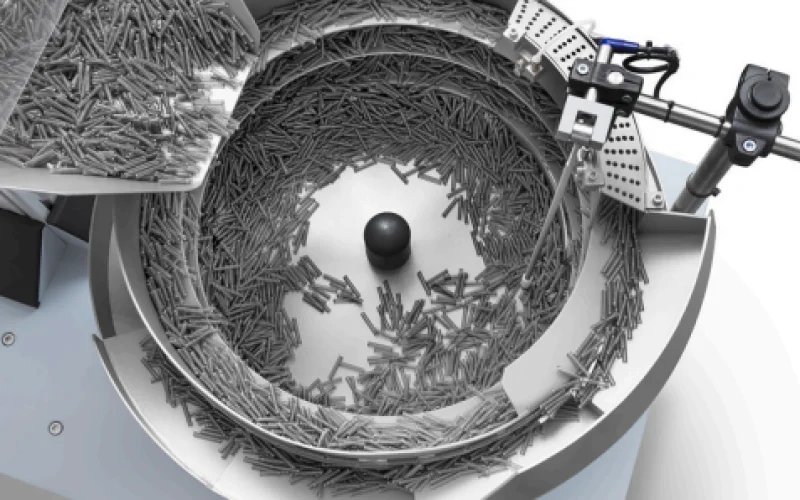
- Check bowl for part jams or unusual accumulation patterns
- Verify the controller is set to the correct amplitude for the current part
Weekly Checks (Maintenance Level)
- Inspect leaf springs for hairline cracks — replace any cracked spring immediately
- Check coil and armature clearance (should be 1.5–2.0 mm for most drives)
- Tighten all mounting bolts to specified torque
- Clean bowl interior — remove dust and part residue
- Check controller output voltage and waveform
Monthly Checks
- Measure vibration amplitude with a dial gauge or accelerometer — compare against commissioning baseline
- Inspect track lining (polyurethane coating) for wear — reline if thickness falls below 1 mm
- Check drive coil insulation resistance (should be >1 MΩ to earth)
Annual Service
- Replace all leaf springs as a preventive set
- Rebalance bowl if tooling has been modified
- Check and re-tighten all electrical connections
- Service or replace drive coil if insulation resistance has dropped
Spare Parts to Keep On Hand
A minimum spare parts kit should include: one complete leaf spring set, one drive coil (or a tested spare drive unit), one set of track lining strips, and spare fasteners for the bowl mounting.